.png&w=128&q=75)


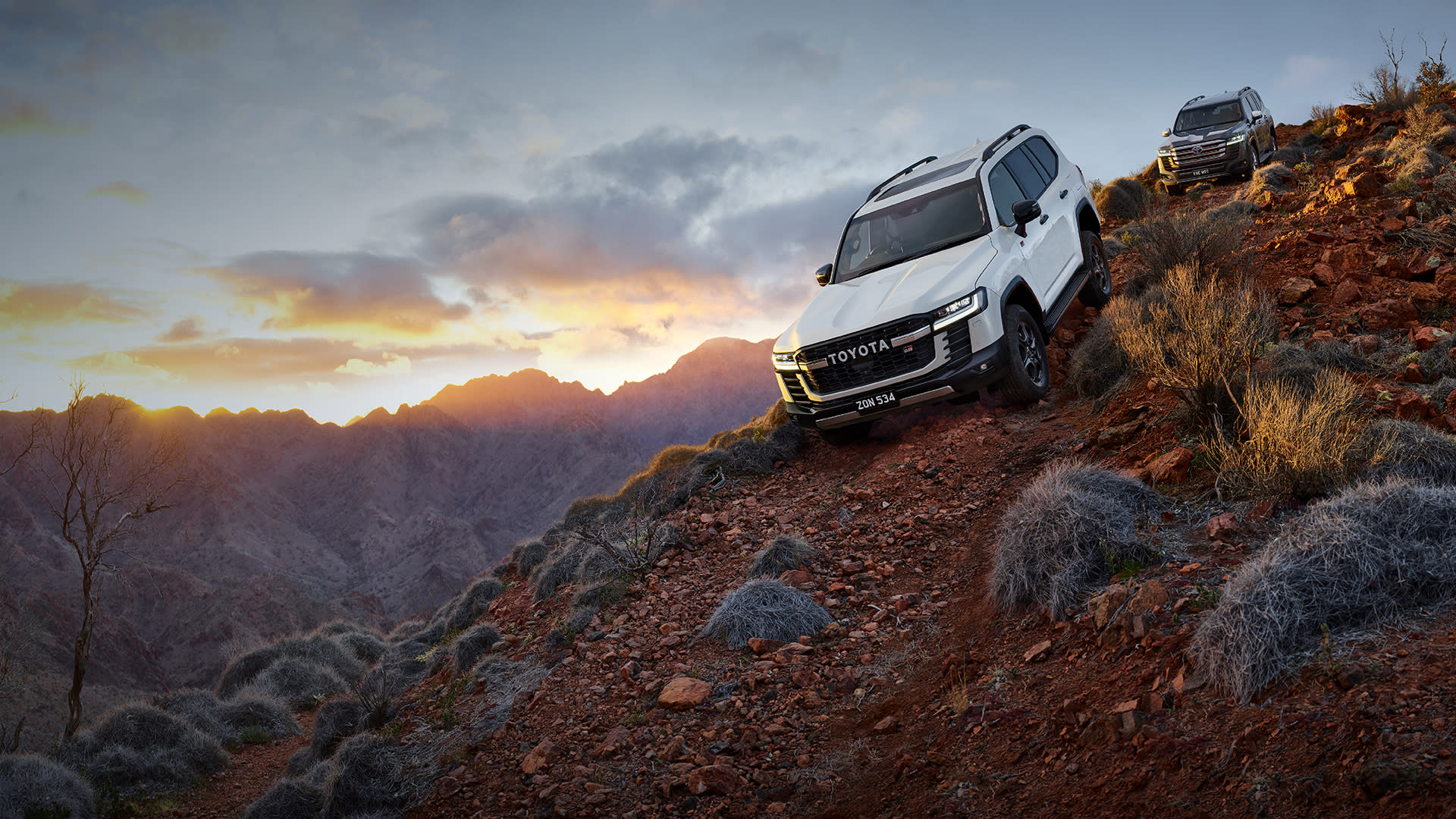
The Most Powerful LandCruiser Yet
Posted in News
The Most Powerful LandCruiser Yet: LandCruiser 300 Performance Hybrid Explained
The Toyota LandCruiser has spent decades building a reputation for going just about anywhere, from long-distance touring and towing to challenging off-road conditions.
Now, the LandCruiser 300 is entering a new chapter with the introduction of its first-ever hybrid powertrain. But this isn't a hybrid designed simply around fuel efficiency.
The LandCruiser 300 Performance Hybrid combines a 3.5-litre twin-turbo V6 petrol engine with an electric motor to deliver 341kW of power and 790Nm of torque, making it the most powerful LandCruiser yet.
So, what exactly does the new Performance Hybrid bring to the LandCruiser 300, and does adding hybrid technology change the things that make it the most powerful LandCruiser yet?
LandCruiser 300 Performance Hybrid at a Glance
What is the LandCruiser 300 Performance Hybrid?
The LandCruiser 300 Performance Hybrid combines a 3.5-litre twin-turbo V6 petrol engine with a single motor-generator and a 10-speed automatic transmission.
Rather than using the electric motor simply to improve fuel economy, Toyota has developed the system with performance and responsiveness in mind.
The petrol engine and electric motor can work together when extra performance is required, with the electric motor providing additional torque and power.
The result is 341kW of combined power and 790Nm of combined torque. The system also delivers a more immediate throttle response, with Toyota reporting a 40 per cent improvement compared with the 3.3-litre twin-turbo diesel powertrain.
How Does the LandCruiser 300 Hybrid Work?


What Does This Mean for 4WD Owners?
The Performance Hybrid has been developed with performance in mind. The electric motor works alongside the petrol engine to provide additional power and torque when required.
- Towing: Extra performance when accelerating and climbing.
- Off-road driving: Hybrid power works alongside the LandCruiser's existing 4WD hardware.
- Touring: A combination of petrol and electric power designed for a large 4WD.
- Responsiveness: Electric motor assistance can provide immediate torque.
LandCruiser 300 Hybrid power and torque
Power figures are often the first thing people look at when comparing vehicles, but torque is particularly relevant in a large 4WD.
The Performance Hybrid produces 341kW of combined power and 790Nm of combined torque.
For context, the 3.3-litre twin-turbo diesel LandCruiser 300 produces 227kW and 700Nm.
That means the Performance Hybrid has a substantial increase in peak output.
However, it's important to understand that the engine and electric motor don't simply add their individual maximum figures together. The combined figures are the system outputs quoted by Toyota.
| LandCruiser 300 Diesel | Performance Hybrid | |
|---|---|---|
| Engine | 3.3L Twin-Turbo Diesel V6 | 3.5L Twin-Turbo Petrol V6 |
| Power | 227kW | 341kW combined |
| Torque | 700Nm | 790Nm combined |
| Braked Towing | 3,500kg | 3,500kg |
Does the LandCruiser 300 Performance Hybrid still have serious 4WD capability?
The introduction of a hybrid powertrain doesn't mean Toyota has moved away from the traditional LandCruiser formula.
The Performance Hybrid continues with a full-time 4WD system and dual-range transfer case.
It also retains Multi-Terrain Select and adaptive variable suspension.
The two Performance Hybrid grades then take slightly different approaches.
The Sahara ZX uses a rear Torsen limited-slip differential, while the GR Sport is more specifically equipped for off-road driving with front and rear locking differentials and electronically controlled E-KDSS suspension.
So, while the powertrain has changed, the basic concept remains familiar to LandCruiser owners: a large 4WD designed for both everyday driving and more demanding conditions.
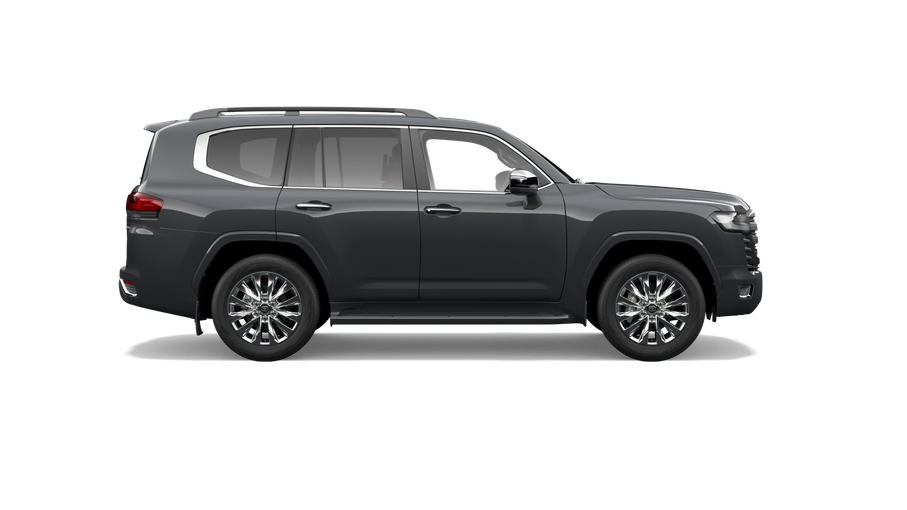
Toyota LandCruiser 300 Sahara ZX
- 10-speed automatic transmission with manual shift mode
- 12.3" colour touchscreen display
- Dual rear entertainment system
- Heated and ventilated front seats
- Rear Torque Sensing Limited Slip Differential (LSD)
- Drive Mode Select (5 mode)
- 10 SRS airbags
- Adaptive High Beam System (AHS)
- Toyota Connected Services[CS14] with features designed to enhance your safety, comfort and convenience – accessible via the myToyota Connect app[CS5].
- 3.3L V6 twin turbo diesel engine or 3.5L V6 twin-turbo with i-FORCE MAX Performance 1 Motor Hybrid
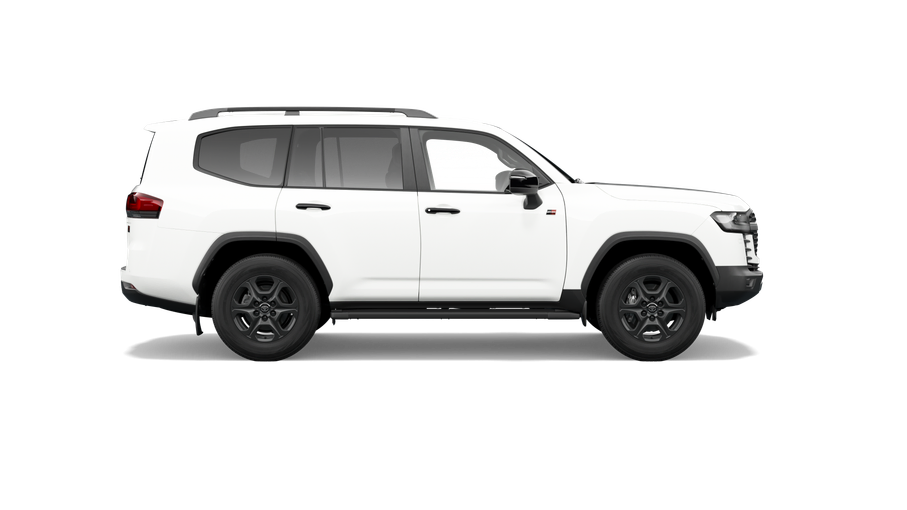
Toyota LandCruiser 300 GR Sport
- 10-speed automatic transmission with manual shift mode
- 12.3" colour touchscreen display
- Electronic Kinetic Dynamic Suspension System (E-KDSS)
- GR Sport badging on grille, front doors and rear tailgate
- Drive Mode Select (5 mode)
- 10 SRS airbags
- Adaptive High Beam System (AHS)
- Toyota Connected Services[CS14] with features designed to enhance your safety, comfort and convenience – accessible via the myToyota Connect app[CS5].
- 3.3L V6 twin turbo diesel engine or 3.5L V6 twin-turbo with i-FORCE MAX Performance 1 Motor Hybrid
- Front and rear differential locks
What about fuel economy?
This is an important distinction when talking about the LandCruiser 300 Hybrid.
The word "hybrid" doesn't automatically mean that the Performance Hybrid will use less fuel than the diesel.
Toyota has positioned this system around performance, rather than simply maximising fuel efficiency.
Current Australian specifications list the Performance Hybrid with a combined fuel consumption figure of 10.0L/100km, while the diesel LandCruiser 300 is listed at 8.9L/100km, although real-world consumption will vary with driving conditions, loads, towing and terrain.
That helps explain why Toyota calls this a Performance Hybrid.
The purpose of the electric motor here is not simply to make the LandCruiser more economical. It is there to complement the petrol engine and enhance the vehicle's performance and response.

LandCruiser Hybrid: What Does It Actually Mean?
Does it need charging?
No. The Performance Hybrid is not a plug-in hybrid. Its battery is charged as part of the vehicle's operation.
Is it still a 4WD?
Yes. It retains full-time four-wheel drive and a dual-range transfer case.
Is the focus fuel economy?
The Performance Hybrid has been developed primarily around enhancing performance, power and responsiveness.
So, what is the point of the LandCruiser 300 Hybrid?
The simplest way to understand the Performance Hybrid is this:
It isn't a hybrid LandCruiser designed primarily around fuel economy. It's a LandCruiser using hybrid technology to enhance performance.
The electric motor works alongside the 3.5-litre twin-turbo petrol V6 to produce 341kW and 790Nm, while the vehicle retains full-time four-wheel drive, dual-range capability and a 3,500kg braked towing capacity.
For current 4WD owners, that makes the Performance Hybrid an interesting development in where large touring and off-road vehicles are heading.
Hybrid technology is no longer limited to small SUVs and passenger cars.
Toyota has now applied it to one of its most recognisable 4WDs, with the focus firmly on power, responsiveness and capability.
So, what is the point of the LandCruiser 300 Hybrid?
The simplest way to understand the Performance Hybrid is this:
It isn't a hybrid LandCruiser designed primarily around fuel economy. It's a LandCruiser using hybrid technology to enhance performance.
The electric motor works alongside the 3.5-litre twin-turbo petrol V6 to produce 341kW and 790Nm, while the vehicle retains full-time four-wheel drive, dual-range capability and a 3,500kg braked towing capacity.
For current 4WD owners, that makes the Performance Hybrid an interesting development in where large touring and off-road vehicles are heading.
Hybrid technology is no longer limited to small SUVs and passenger cars.
Toyota has now applied it to one of its most recognisable 4WDs, with the focus firmly on power, responsiveness and capability.
The LandCruiser 300 enters a new era
The LandCruiser has evolved considerably over the years, but its basic purpose has remained remarkably consistent.
The new Performance Hybrid doesn't abandon that formula.
Instead, it adds an electric motor to the equation and uses it alongside a twin-turbo petrol V6, while retaining the 4WD hardware, towing ability and off-road technology expected from a LandCruiser 300.
With 341kW of combined power, 790Nm of combined torque and a 3,500kg braked towing capacity, the LandCruiser 300 Performance Hybrid represents a significant change in the way Toyota approaches performance in a large 4WD.
For anyone familiar with the LandCruiser 300 Series, the interesting part isn't simply that it is now a hybrid.
It's what Toyota has chosen to use the hybrid technology for.


